People related Frameworks
This section summarises content from QCI and other frameworks that are related to individual and organisational competencies. Readers must consult the authoritative sources for the actual guidelines.
This section summarises content from QCI and other frameworks that are related to individual and organisational competencies. Readers must consult the authoritative sources for the actual guidelines.
The digital ecosystems of modern enterprises are large and complex, usually spread geographically across the country and the world. The ecosystems encompass a large number and variety of technologies, products, platforms, systems, networks, applications, databases and services, which may be deployed on-premises, on cloud (IaaS, PaaS, SaaS) or in hybrid mode.
Enterprises usually have multiple teams of IT, OT, IIoT, information security and cybersecurity professionals and managers, who are responsible to carry out the organisations’ functions, activities and tasks related to the digital ecosystem of the organisation. CSEs and other organisations would derive significant benefits by establishing a strategic program and structured approach to ensure that their workforce and teams managing the digital ecosystem have the requisite cybersecurity competence (knowledge, skills and levels of expertise) to be effective in handling the entire gamut of work and responsibilities of IT, OT, IIoT, information security and cybersecurity.
Given the size and complexity of digital ecosystem, it may be impractical for most CSEs and other organisations to depend solely upon their internal workforce to acquire, implement, engineer, operate, manage and sustain the ecosystem. In practice, the organisations have a composite workforce that has a mix of own employees, hired manpower, specialist (OEM, ISV, SI, SaaS) teams and resources of managed services providers (MSPs), who work together to carry out the functions, activities and tasks related to the digital ecosystem.
At an organisational level the digital ecosystem workforce can be divided into multiple levels of hierarchy, as given below. Typical job titles in each level indicate the associated job functions, tasks, and responsibilities.
Senior management level – Vice Presidents, CTO, CIO, CISO, CSO, Heads of Business Units, Divisions, Departments.
Middle and lower management level – Project Managers, Technology Managers, Operations Managers, Security Managers, Cyber Defence Team Leads, NOC and SOC Team Leads, GRC Managers, Workforce Development Managers etc.
Individual Contributor level – Operators, Analysts, Administrators, Engineers, Specialists, Technicians, Architects, Developers, Testers, Quality Testers, Apprentices, Associates, Interns.
Senior and middle level managerial roles are always assigned to employees of the organisations. Technical work and its deliverables could be assigned to external teams from OEMs, SIs, MSPs and other service providers, as long as the overall supervision and oversight is handled by designated senior and middle level managers of the organisation. The middle and lower management levels, and individual contributors, are accountable and responsible for day-to-day operational activities and tasks.
The concept of “virtual managers” or “external advisors with C-level access” is gaining acceptance amongst many organisations, who need such services in a more flexible, scalable and cost-effective manner. The virtual manager, for example, a virtual chief information security officer (vCISO) performs most of the core functions as a traditional, full-time manager. They just differ in terms of their engagement model (part time) and presence (non-physical) in the organisation.
The sheer breadth and variety of the digital ecosystem technologies, products, deployment models, processes and practices in an organisation makes it impossible for any professional to develop competency in every area. Organisations therefore require professionals with different specialisations to work together in teams. An illustrative list of knowledge and skill specialisation areas for the composite workforce is given below. Source: NCIIPC-QCI Scheme for Cybersecurity Professionals.
| . | Knowledge and Skills Specialisation Areas |
|---|---|
| Knowledge Area | |
| 1 | Network Infrastructure & Network Security |
| 2 | Systems (HW, VM, Firmware, OS) Security |
| 3 | Software and Platform Operations Security |
| 4 | Secure Systems Engineering |
| 5 | Secure Software Design & Development |
| 6 | Enterprise Governance, Risk and Compliance |
| 7 | Enterprise Supply Chain |
| 8 | Enterprise IT and Information Security |
| 9 | Enterprise Cyber Defence and Security Operations |
| 10 | Data Analytics |
| 11 | Cyber Forensics |
| 12 | Cyber Security Training & Awareness |
| 13 | ICS Cyber Security |
| Skills | |
| 1 | Programming & Scripting |
| 2 | Managing and Securing Systems, Networks, Applications |
| 3 | Managing and Securing Information, Data And Identities |
| 4 | Custom Software Development and Management |
| 5 | Cyber Defence and Security Operations |
| 6 | Others (OEM/ ISV Technologies and Products) |
Each knowledge and skill area also has an expertise level (basic, intermediate, expert) associated with it. The expertise levels should generally be mapped to the workforce hierarchy, keeping in view the functions executed by a particular hierarchy of the workforce, the size of organisation and the complexity of their digital ecosystem. For example, junior levels are expected to acquire at least the basic level of expertise, while middle and senior levels are expected to acquire intermediate or expert level of expertise. Professionals working with the OEMs, ISVs, SIs, MSPs and other service providers are expected to have intermediate or expert level of expertise in their respective areas of specialisation.
CSEs are advised to refer Appendix 1A of NCIIPC-QCI Scheme for Cybersecurity Professionals, which has a comprehensive and detailed table of knowledge, skills and expertise for each specialisation area of an organisation.
The composite workforce of CSEs and other organisations carry out the five technical and five management functions on a daily or periodic basis. In practice, to enable proper distribution of work and responsibilities, the ten functions are sub-divided into different domains.
A domain in the context of workforce specialisations is a distinct technical/ organisational capability of processes, people and technology that a CSE must have to meet its IT and cyber security objectives successfully. Each domain typically has an organisational hierarchy associated with it that is designed to handle different levels of work and responsibilities. An illustrative diagram of IT and cybersecurity domains mapped to organisational teams is given below.
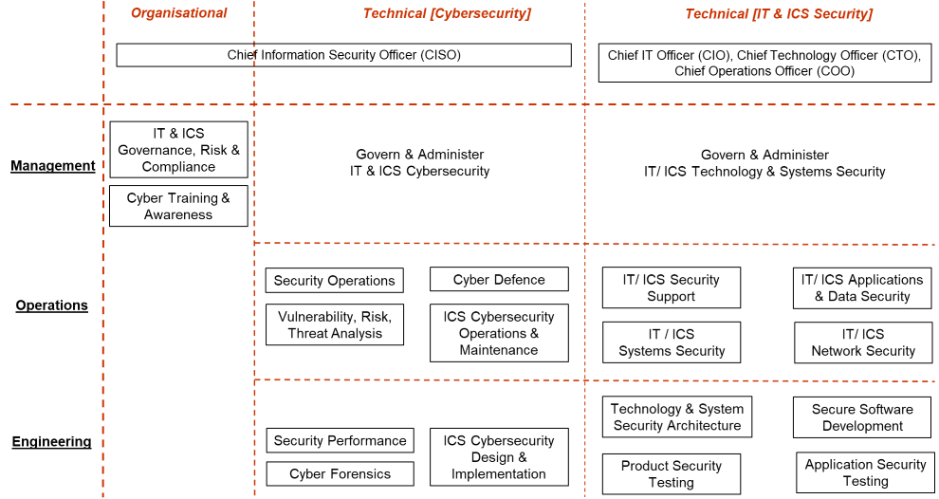
An illustrative list of IT and cybersecurity job roles and job descriptions in an entity is given below. The knowledge, skills and expertise level required for each of the job roles is mentioned against each role in the form of codes that are taken from Appendix 1A of NCIIPC-QCI Scheme for Cybersecurity Professionals.
| . | Organisation Job Role (Job Title) | Work, activities and tasks required to be done as part of the Job Role (Job Description) | Knowledge, Skills & Expertise |
|---|---|---|---|
| 1 | Information Security Specialist | Conduct risk assessment to help identify cybersecurity risks and determine appropriate controls to ensure that IT and ICS systems perform within acceptable limits of risks. Monitor, track and manage risk mitigations and exceptions to ensure compliance with cybersecurity standards and policies. | KM-0601F SM-0602F |
| 2 | Information Security Officer (ISO) Chief Info Security Officer (CISO) | Drive cybersecurity policies, standards and guidelines aligned to the organisation’s risk management framework, legislation and regulation. Responsible for establishing and approving ISMS policies, standards and guidelines to effectively manage cybersecurity risks, integrate and align the cyber risk management framework in the organisation’s context. | KM-0601A, KM-0701F SM-0602A, SM-0603A |
| 3 | IT GRC Strategist | Strategise, design IT GRC framework and ISMS for organisations and drive projects and investments for cybersecurity of the organisation. | KM-0601M, KM-0701A SM-0602A, SM-0603A |
| 4 | Field Security Engineer | Provide engineering support in the field for security and security management of in-production/ in-use IT and ICS systems of both on-premises and cloud infrastructure of organisations. | KM-0401F, KM-0801F, KM-0802F, KM-0803F SM-0301F, SM-0602F |
| 5 | Technology & Systems Security Team Leader Chief Technology Officer (CTO) Chief IT Officer (CIO) | Conceptualise, design, engineer, integrate and implement the security and security management aspects in IT and ICS systems of both on-premises and cloud infrastructure of organisations. | KM-0401A, KM-0801A, KM-0802A, KM-0803A SM-0301A, SM-0602A |
| 6 | Technology &System Security Architect Technology Strategist | Strategise, conceptualise, design, engineer, integrate the security and security management aspects of large, complex IT and ICS systems of both on-premises and cloud infrastructure of organisations. Identify IT and ICS cybersecurity needs of the organisation and translate them into security designs and principles. Recommend and lead the adoption of new technological advances and best practices in IT and ICS systems to mitigate security risks. | KM-0401A, KM-0801A, KM-0802A, KM-0803A SM-0301A, SM-0602A, SM-0603A |
| 7 | Apps & Data Security Engineer | Configure, operate, administer the day to day security aspects of both on-premises and cloud software platforms (including SaaS) of organisations. Provide security engineering support for development of secure software (Dev-Sec-Ops, secure CI/CD and AI/ML pipelines). Work to be done using enterprise platforms for identity, role-based access management, LDAP, zero-trust infrastructure, IT and ICS asset management, EMS (application management), ITSM and ISMS platforms for patch management, configuration management (CMDB), ticketing and incident management, compliance management, reporting. | KM-0301F, KM-0302F, KM-0501F SM-0101F, SM-0301F, SM-0401F |
| 8 | Apps & Data Security Administrator | Design, oversee and manage secure software design and engineering, including secure software supply chain management. Plan, design, engineer, analyse, oversee the security and security management aspects of software platforms of both on-premises and cloud infrastructure (including SaaS) of organisations. | KM-0301A, KM-0302A, KM-0401A, KM-0501A SM-0301A |
| 9 | Software Security Tester | Security testing of software platforms and applications prior to use in production environment and prior to upgrades. | KM-0502F SM-0401F |
| 10 | Software Security Analyst/ Administrator | Oversee and manage the security testing of software platforms and applications. | KM-0502A SM-0401A |
| 11 | Product Security Tester | Security testing of hardware, devices and appliances prior to use in production environment and prior to upgrades. | KM-0201F, KM-0202F SM-0401F |
| 12 | Product Security Analyst/ Administrator | Oversee and manage the security testing of hardware, devices and appliances. | KM-0201A, KM-0202A SM-0401A |
| 13 | Network Security Engineer | Configure, operate, administer the day to day security aspects of telecom, IT and ICS networks of organisations. Work to be done using enterprise platforms for patch management, configuration management (CMDB), ticketing and incident management, NMS (network management), reporting. | KM-0101F, KM-0102F SM-0101F, SM-0201F, SM-0601F |
| 14 | Network Security Administrator | Plan, design, engineer, analyse, oversee the security and security management aspects of telecom, IT and ICS networks of organisations. | KM-0101A, KM-0102A, KM-0201F, KM-0202F SM-0201A, SM-0601F |
| 15 | System Security Engineer | Configure, operate, administer the day to day security aspects of systems of both on-premises and cloud infrastructure of organisations. Work to be done using enterprise platforms for patch management, configuration management (CMDB), ticketing and incident management, EMS (systems management), reporting. | KM-0201F, KM-0202F SM-0101F, SM-0201F, SM-0601F |
| 16 | System Security Administrator | Plan, design, engineer, analyse, oversee the security and security management aspects of systems of both on-premises and cloud infrastructure of organisations. | KM-0101F, KM-0102F, KM-0201A, KM-0202A SM-0201A, SM-0601F |
| 17 | Security Support Operator | Operate and support the day to day security issues of end user systems and devices. | KM-0201F, KM-0202F, KM-0803F SM-0101F |
| 18 | System Security Administrator | Plan, design, engineer, analyse, oversee the security and security management aspects of end user systems and devices. | KM-0201A, KM-0202A, KM-0803A SM-0101F |
| 19 | Security Performance Junior Analyst | Collect, collate, normalise, analyse cybersecurity related data for assessing performance of cybersecurity functions | KM-1001F SM-0101F |
| 20 | Security Performance Senior Analyst | Plan, design, engineer, oversee the cybersecurity performance analysis to derive insights and identify areas of improvement. | KM-0101F, KM-0102F, KM-0201F, KM-0202F, KM-1001A SM-0101F |
| 21 | ICS Cybersecurity Operator | Operate, administer the day to day security aspects of ICS environment of organisations. | KM-1301F |
| 22 | ICS Cybersecurity Analyst ICS Security Manager | Plan, design, engineer, analyse, oversee the security and security management aspects of ICS environment of organisations. | KM-1301A |
| 23 | ICS Cyber Defence Strategist | Develop frameworks, strategies and processes for vulnerability management, protection, cyber incident detection, response, recovery, investigation and cyber forensics in the ICS environment. | KM-1301M SM-0602F, SM-0602A, SM-0603A |
| 24 | IT Cyber Defence Operator | Operate, carry out the day to day cyber defence functions like rogue asset discovery, vulnerability tracking, cyber threat intelligence (CTI) analysis. | KM-0804F, KM-0901F SM-0101F, SM-0501F |
| 25 | IT Cyber Defence Analyst Cyber Defence Manager | Plan, design, engineer, analyse, oversee the security and security management aspects of cyber defence. May include cybersecurity management of outsourced and third-party service providers like MSPs and MSSPs. | KM-0804A, KM-0901A SM-0101F, SM-0501F, SM-0501A |
| 26 | IT Cyber Defence Strategist | Develop frameworks, strategies and processes for protection, threat and cyber incident detection, response, recovery in the IT environment. | KM-0804A, KM-0901M SM-0101F, SM-0501A, SM-0601F, SM-0603A |
| 27 | Vulnerability, Threat, Risk Operator | Carry out the day to day vulnerability and risk assessment, threat hunting activities, technical audits. Proactively scan logs, network traffic, SIEMs and other channels for suspicious behaviours and indicators of compromise. Identify IT and ICS assets prone to cyber threats and attacks, monitor for potential threats actors/ groups/ individuals attempting cyber-attacks. | KM-0804F SM-0602F |
| 28 | Vulnerability, Threat, Risk Analyst Risk Manager | Plan, design, engineer, oversee, manage the vulnerability and risk assessment, threat hunting activities, technical audits. Derive deep insights for providing strategic direction and investments. | KM-0804A SM-0602A, SM-0603A |
| 29 | Security Operations Operator | Carry out the day to day security operations activities in the SOC, like surveillance and monitoring of IT and ICS systems and assets, support the identification of threats and vulnerabilities, provide incident response and remediation support. | KM-0201F, KM-0803F SM-0101F |
| 30 | Security Operations Analyst Security Operations Manager | Plan, design, engineer, oversee, manage the security operations in the SOC. Respond to cyber incidents, coordinate for containment and mitigation of incidents and recovery. | KM-0201A, KM-0803A SM-0101F |
| 31 | Cyber Forensics Junior Analyst Incident Response Operator | Analyse and investigate cyber incidents to identify breaches, loopholes, process deviations, failures. | KM-1101F SM-0101F, SM-0501F |
| 32 | Cyber Forensics Senior Analyst Incident Response Manager | Plan, direct, oversee, monitor and manage the cyber forensic analysis and investigation activities into the cause and impact of incidents, develop detailed reports on incident timeline, evidence, findings, conclusions and recommendations. | KM-1101A SM-0101F, SM-0501A |
| 33 | Cyber Defence Architect Incident Response Strategist | Strategise, design, engineer, integrate cyber forensics and investigation processes into the security management of large, complex IT and ICS systems of both on-premises and cloud infrastructure of organisations. | KM-1101M SM-0101F, SM-0501A |
| 34 | Cyber Training & Awareness Assistant | Operate the routine cybersecurity training and awareness programmes. | KM-1201F SM-0601F, SM-0602F |
| 35 | Cyber Training & Curriculum Manager | Design and manage cybersecurity curriculum for end users, IT and ICS specialists and managers. | KM-1201A SM-0601A, SM-0602F |
An illustrative reporting hierarchy for different job roles is given in the diagram below.
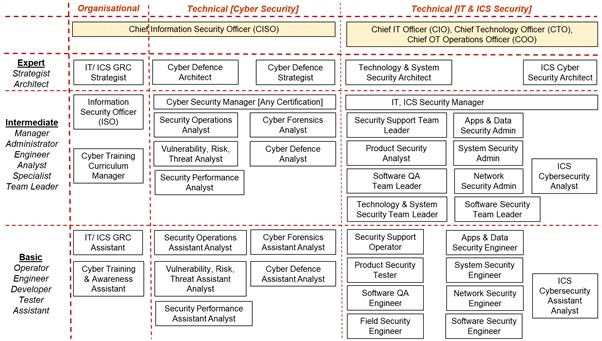
The generic top-most positions for different reporting hierarchies are described as under:
Highly specialised job roles like IT/ ICS GRC Strategist, Technology & System Security Architect, ICS Cyber Security Architect, Cyber Defence Strategist and Cyber Defence Architect are typically required in very large entities and consultancy organisations. Mid-sized and smaller CSEs may choose to contract their services on need- basis from consultancy organisations.
The Government has embarked upon capacity building of cybersecurity workforce through mechanisms such as academic and education programs and certification of competency profiles by internationally recognised accreditation and certification bodies. A number of academic programs for cybersecurity are already being conducted by leading universities. In addition, there are many global and national level certification programs that are run by different private bodies.
An indicative list of major international certifications is collated here. The list has been prepared, based on publicly available information, and has not been vetted for correctness and completeness. Suggestions for improvements and rectification of errors are welcome.
Organisations are advised to adopt the following steps to align workforce competencies and certifications to different IT and cyberseecurity job roles:
Categorise the organisation’s cyber security workforce requirements for different IT and cybersecurity domains and job roles, using the information of the work, activities and tasks that are listed against the job roles.
Map the knowledge and skills specialisation areas and expertise levels that are considered essential for the job roles. Identify the appropriate set of competency certifications and/ or academic programs that cover the knowledge, skills and expertise requirements for the job roles.
Choose a workforce composition mix that is most appropriate to achieve the IT and cybersecurity objectives of the organisation. The small and medium sized CSEs can club some of the job roles within Technical (Cybersecurity) vertical and the Technical (IT & ICS Security) vertical and assign it to one person with appropriate knowledge and skillsets. The clubbing of job roles across the above mentioned two verticals shall not be done.
Use the job roles, job descriptions, knowledge and skills specialisation areas, expertise levels, competency certifications and academic programs to create appropriate job profiles for internal and/ or external hiring and/or for sourcing of competent workforce from service providers and consultancy organisations.
Use the competency profiles (knowledge, skills and expertise levels) for different job roles to design training programs and if required for hiring training bodies to train the workforce in different cyber security domains, as part of capability and capacity development programs.
Use the competency profile certifications provided by accredited bodies recommended by the government/national nodal agencies as a basis for selection.
Use the competency profile certifications to demonstrate to the regulators and national agencies that cyber security personnel employed in critical IT & ICS domains have the required competence to carry out the respective job role responsibilities.
The NCIIPC-QCI Scheme for accreditation of IT and ICS Consultancy Organisations (COs) is an initiative of the Government to develop a pool of specialist organisations that can help CSEs in handling the different dimensions of work related to the digital ecosystem.
‘Consultancy’ is the act of providing technical expertise, by an individual or an organisation deemed competent in delivering services as per the defined scope in exchange for a fee. The nature of such expertise may be technical, thematical, procedural or managerial.
Organisations can usually group their work of handling their digital infrastructure into multiple domains as given here and also tabulated below. Each of these domains are inherently complex and dynamic and require a substantial depth and breadth of knowledge, expertise and skills to do the work.
| . | Domain Type | Domain Title |
|---|---|---|
| 1 | Organisational | Governance, Risk and Compliance |
| 2 | Technical | Technology & System Security Architecture |
| 3 | Technical | Secure Software Development |
| 4 | Technical | Application Security Testing |
| 5 | Technical | Security Product Testing |
| 6 | Technical | Network Security Administration |
| 7 | Technical | System Security Administration |
| 8 | Technical | Applications & Data Security Administration |
| 9 | Technical | Security Support Services |
| 10 | Technical | Security Performance Management |
| 11 | Technical | ICS Cyber Security |
| 12 | Technical | ICS Cyber Risk Assessor |
| 13 | Technical | ICS Cybersecurity Design, & Implementation |
| 14 | Technical | ICS Cybersecurity Operations & Maintenance |
| 15 | Technical | Cyber Defence |
| 16 | Technical | Cyber Vulnerability, Threat & Risk Management |
| 17 | Technical | Security Operations |
| 18 | Technical | Cyber Forensics & Investigation |
| 19 | Organisational | Cyber Training & Awareness |
Typical domain ownership and responsibility is described below.
Domain 1 is related to IT/ ICS GRC under the CISO.
Domains 2 to 5 & 13 are related to design, engineering and implementation of IT/ ICS systems by project engineering teams, under the project management organisation.
Domains 6 to 11 & 14 are related to cyber security aspects for consideration by the IT & ICS teams under the CIO/ OT Head.
Domains 12, 15 to 18 are exclusively related to cyber security functions by the IS & SOC teams under the IT / OT CISO.
Domain 19 is related to training under Head HR.
CSEs find it a challenge to hire sufficient in-house resources for all the domains and functions. Hence, they look for competent, capable and trustworthy Consultancy Organisations, who can do some of the work for them.
The Scheme has defined 11 Work Heads for COs, which are aligned to the work domains within organisations as shown in the table below.
| WH-Id | Title of Consultancy Service (Work Head) | Related Domain (indicative) |
|---|---|---|
| WH-1 | Designing and facilitation of implementation of CSMS (L1/L2/L3) with focus on Governance, Risk and Compliance Requirements | Domain 1 (Governance, Risk and Compliance) |
| WH-2 | IT Cyber Security, Architecture, Design, Engineering and Implementation | Domain 2 (Technology & System Security Architecture) Domain 3 (Secure Software Development) Domain 4 (Application Security Testing) Domain 5 (Product Security Testing) |
| WH-3 | IT Cyber Security Administration and Management | Domain 6 (Network Security Administration) Domain 7 (System Security Administration) Domain 8 (Applications & Data Security Administration) Domain 9 (Security Support Services) Domain 10 (Security Performance Management) |
| WH-4 | ICS Cybersecurity Risk Assessment | Domain 12 (ICS Cyber Risk Assessor) |
| WH-5 | ICS Cybersecurity Architecture, Design, Engineering and Implementation | Domain 13 (ICS Cybersecurity Design, & Implementation) |
| WH-6 | ICS Cybersecurity Operations & Maintenance | Domain 14 (ICS Cybersecurity Operations & Maintenance) |
| WH-7 | Cyber Defence | Domain 15 (Cyber Defence) |
| WH-8 | Cyber Security Monitoring and Assessment | Domain 16 (Cyber Vulnerability, Threat & Risk Management) |
| WH-9 | Cyber Security Operations | Domain 17 (Security Operations) |
| WH-10 | Cyber Security Forensics & Investigation | Domain 18 (Cyber Forensics & Investigation) |
| WH-11 | Cyber Training & Skill Gap Assessments | Domain 19 (Cyber Training & Awareness) |
CXOs can use the mapping of domains to each WH Id to identify who can do what work.
The detailed scope of consultancy work/ services is described in a separate table in the Scheme. This table can be used by the stakeholders in the manner given below:
Lapses in the quality of work/ services of COs is often due to lack of competence in the professionals provided by the COs to the entities. It may also be due to gaps in the work package given to the COs.
The Scheme has a well-defined redressal process to address the issues related to capabilities and competencies of COs.
Accreditation Bodies (AB) are responsible for accreditation of COs under the Scheme. During the accreditation process, the CO shall be attested for their capability, competence and level of expertise to provide consultancy service as per the detailed scope of work/ services tabulated above.
The accreditation process requires the CO to demonstrate to the AB that their consultants/ professionals have the required competency (knowledge, skills and advanced/ master level expertise) to deliver the services. The Scheme tabulates the knowledge and skill requirements for the consultants/ professionals, which is derived from the Scheme for Cybersecurity Professionals.
The evidence of competency is usually demonstrated through global certifications and documented work experience of the professionals.
Once accredited, the CO can offer their services as a whole package or parts of it, depending on the scope chosen and the services sought by the client.
CSEs must leverage the robust mechanism of the NCIIPC-QCI Scheme to accredit skilled consultancy organisations. The CSEs can hire COs to become a part of their composite workforce and handle portions of the work of conceptualisation, design, engineering, acquisition, operation and management of their digital infrastructure.
The NCIIPC-QCI Scheme for accreditation of IT and ICS Training Bodies (TBs) is an initiative of the Government to develop a pool of specialist organisations that can help CSEs in training their workforce to handle the different dimensions of work related to the digital ecosystem. The TBs can also offer training services to individual professionals, who are desirous of enhancing their competencies and obtaining certifications.
The core objective of the Scheme is to put in place a robust system of oversight and due diligence to accredit bonafide TBs, with an assurance that they can impart high quality training to the organisation’s workforce and individual professionals.
Training offered by the TBs to CSEs and individuals are aligned to the 19 domains of the CSEs that are defined under the Scheme and tabulated below. This alignment will help the CSEs to easily map the training objectives and outcomes to their domain requirements.
| . | Domain Type | Domain Title |
|---|---|---|
| 1 | Organisational | Governance, Risk and Compliance |
| 2 | Technical | Technology & System Security Architecture |
| 3 | Technical | Secure Software Development |
| 4 | Technical | Application Security Testing |
| 5 | Technical | Security Product Testing |
| 6 | Technical | Network Security Administration |
| 7 | Technical | System Security Administration |
| 8 | Technical | Applications & Data Security Administration |
| 9 | Technical | Security Support Services |
| 10 | Technical | Security Performance Management |
| 11 | Technical | ICS Cyber Security |
| 12 | Technical | ICS Cyber Risk Assessor |
| 13 | Technical | ICS Cybersecurity Design, & Implementation |
| 14 | Technical | ICS Cybersecurity Operations & Maintenance |
| 15 | Technical | Cyber Defence |
| 16 | Technical | Cyber Vulnerability, Threat & Risk Management |
| 17 | Technical | Security Operations |
| 18 | Technical | Cyber Forensics & Investigation |
| 19 | Organisational | Cyber Training & Awareness |
Annexures 1A, 1B and 1C of the Scheme document provides a detailed view of the expected offering from the TBs. The details are given under the following heads:
Readers are advised to consult the Scheme documents for further details.
Accreditation Bodies (AB) are responsible for accreditation of TBs under the Scheme. During the accreditation process, the TB shall be attested for their capability, competence and level of expertise to provide training service as per the detailed scope of work/ services tabulated in the Scheme document.
The accreditation process requires the TB to demonstrate to the AB that their trainers have the required competency (knowledge, skills and advanced/ master level expertise) to deliver the training. The Scheme tabulates the knowledge and skill requirements for the trainers, which is derived from the Scheme for Cybersecurity Professionals.
The evidence of competency is usually demonstrated through global certifications and documented work experience of the trainers.
Once accredited, the TB can offer their training services as a whole package or parts of it, depending on the scope chosen and the services sought by the client.
CSEs must leverage the robust mechanism of the NCIIPC-QCI Scheme to accredit skilled training bodies. The CSEs can hire TBs to train their composite workforce to handle portions of the work of conceptualisation, design, engineering, acquisition, operation and management of their digital infrastructure.
The Scheme documentation will also be useful to the internal training teams of organsiations. They can use the structure and content to devise their training packages just like the accredited TBs.
The implementation, operation and management of cyber security in CSEs requires to be assessed by independent accredited Certification Bodies (CBs) and Inspection Bodies (IBs) for compliance with prescribed standards for the sectors. Further, the CSEs require competent cyber security professionals, who are assessed and certified by independent accredited Personnel Certification Bodies (PrCBs). The CSEs also require competent consultancy organisations (COs) and training bodies (TBs), whose expertise and competence is assessed and certified by independent Accreditation Bodies (ABs).
NCIIPC and Quality Council of India (QCI) have formulated and designed a comprehensive Scheme for “Conformity Assessment Framework for Cybersecurity of Critical Sector Entities”. The objective of the Scheme is to establish robust cybersecurity accreditation, certification and inspection processes for
The Scheme incorporates the international framework for accreditation of conformity assessment bodies, viz, CBs, IBs and PrCBs, which is the most appropriate mechanism to ensure quality, integrity, consistency and standardisation.
The CAF for cyber security of CSEs comprises of the following Schemes:
Details of the Scheme are available on NCIIPC and QCI websites.
The outcomes delivered by the Schemes are as under:
Pool of accredited CBs & IBs: The Government, Regulators, NCIIPC, CSEs and other organisations will have a pool of accredited CBs and IBs for carrying out conformity assessment and/ or inspection of an organisation’s information infrastructure and information security/ cybersecurity management system (ISMS/ CSMS).
Pool of accredited PrCBs and certified Cyber Security Professionals: All organisations will have an indigenous pool of certified cybersecurity professionals, who are assessed and certified by accredited PrCBs for their competence (knowledge, skills, expertise) to implement and ensure IT and OT cyber resilience. The competency certification of cybersecurity professionals is closely aligned with the workforce competency described here.
Pool of accredited COs and TBs: All organisations will have an indigenous pool of accredited COs and TBs with independently certified expertise and competence, to provide them cybersecurity consultancy services and train their workforce. The COs and TBs themselves will leverage the established pool of CSPs for delivering their services.
The Scheme as a whole is adapted to the cybersecurity requirements of CSEs and other organisations of the Indian ecosystem. It is expected to contribute to building national capacity in the cybersecurity domain.
An illustrative list of cybersecurity certifications offered by global certifying bodies has been compiled from publicly available information and is given below. It also gives a generic mapping of the certifications to the domains defined here. The list has not been vetted for correctness and completeness. Suggestions for improvements and rectification of errors are welcome.
| . | Issuing Body | Certification | Description | Indicative Domain(s) |
|---|---|---|---|---|
| 1 | ISACA | CISA | Certified Information Security Auditor | Governance, Risk and Compliance |
| 2 | ISACA | CRISC | Certified in Risk and Information Systems Control | Governance, Risk and Compliance |
| 3 | ISACA | CISM | Certified Information Security Manager | Cyber Defence |
| 4 | ISACA | CGEIT | Certified in the Governance of Enterprise IT | Governance, Risk and Compliance |
| 5 | ISACA | CSX–P | Cybersecurity Practitioner Certification | Cyber Defence |
| 6 | ISACA | CDPSE | Certified Data Privacy Solutions Engineer | Applications & Data Security Administration |
| 7 | ISACA | ITCA | Information Technology Certified Associate | Cyber Defence |
| 8 | ISACA | CET | Certified in Emerging Technology Certification | Technology & System Security Architecture |
| 9 | ISACA | COBIT Foundation | COBIT Foundation Certificates | Governance, Risk and Compliance |
| 10 | ISACA | COBIT Design | COBIT Design and Implementation | Governance, Risk and Compliance |
| 11 | ISACA | COBIT and NIST | Implementing the NIST Cybersecurity Framework Using COBIT 2019 | Governance, Risk and Compliance |
| 12 | ISACA | IT RISK | IT Risk Fundamentals Certificate | Governance, Risk and Compliance |
| 13 | ISACA | CCAK | Certificate in Cloud Auditing Knowledge | Governance, Risk and Compliance |
| 14 | ISACA | CSX NEXUS | CSX Nexus Cybersecurity Certificates | Governance, Risk and Compliance |
| 15 | ISACA | CYBERSECURITY AUDIT | Cybersecurity Audit Certificate Program | Governance, Risk and Compliance |
| 16 | ISACA | COMPUTING | Computing Fundamentals Certificate | Security Support Services |
| 17 | ISACA | NETWORKS AND INFRA | Networks and Infrastructure Fundamentals Certificate | Network & Systems Security Administration |
| 18 | ISACA | CYBERSECURITY | Cybersecurity Fundamentals Certificate | Security Support Services |
| 19 | ISACA | S/W DEVELOPMENT | Software Development Fundamentals Certificate | Secure Software Development |
| 20 | ISACA | CLOUD | Cloud Fundamentals Certificate | Technology & System Security Architecture |
| 21 | ISACA | BLOCKCHAIN | Blockchain Fundamentals Certificate | Technology & System Security Architecture |
| 22 | ISACA | IOT | IoT Fundamentals Certificate | ICS Cybersecurity |
| 23 | ISACA | AI | Artificial Intelligence Fundamentals Certificate | Technology & System Security Architecture |
| 24 | ISC2 | CISSP | Certified Information Systems Security Professional | Cyber Defence |
| 25 | ISC2 | SSCP | System Security Certified Practitioner | System Security Administration |
| 26 | ISC2 | CCSP | Certified Cloud Security Professional | System Security Administration |
| 27 | ISC2 | CAP | Certified Authorisation Professional | Governance, Risk and Compliance |
| 28 | ISC2 | CSSLP | Certified Secure Software Lifecycle Professional | Secure Software Development |
| 29 | ISC2 | HCISSP | Healthcare Information Systems Security Professional | Cyber Defence |
| 30 | ISC2 | CISSP ISAP | Information System Security Engineering Professional | Technology & System Security Architecture |
| 31 | ISC2 | CISSP ISEP | Information System Security Management Professional | System Security Administration |
| 32 | ISC2 | CISSP ISMP | Information System Security Architecture Professional | Technology and System Security Architecture |
| 33 | GIAC | GSEC | GIAC Security Essentials (GSEC) | Cyber Defence |
| 34 | GIAC | GCIA | GIAC Certified Intrusion Analyst (GCIA) | Cyber Defence |
| 35 | GIAC | GMON | GIAC Continuous Monitoring Certification (GMON) | Cyber Defence |
| 36 | GIAC | GCPM | GIAC Certified Project Manager (GCPM) | Cybersecurity Training & Awareness |
| 37 | GIAC | GPEN | GIAC Penetration Tester (GPEN) | Cyber Defence |
| 38 | GIAC | GSOM | GIAC Security Operations Manager (GSOM) | Security Operations |
| 39 | GIAC | GOSI | GIAC Open Source Intelligence (GOSI) | Cyber Vulnerability, Threat and Risk Management |
| 40 | GIAC | GNFA | GIAC Network Forensic Analyst (GNFA) | Cyber Defence |
| 41 | GIAC | GXPN | GIAC Exploit Researcher and Advanced Penetration Tester (GXPN) | Cyber Defence |
| 42 | GIAC | GWAPT | GIAC Web Application Penetration Tester (GWAPT) | Cyber Defence |
| 43 | GIAC | GREM | GIAC Reverse Engineering Malware (GREM) | Cyber Defence |
| 44 | GIAC | GCIH | GIAC Certified Incident Handler (GCIH) | Cyber Vulnerability, Threat and Risk Management |
| 45 | GIAC | GCCC | GIAC Critical Controls Certification (GCCC) | Cyber Vulnerability, Threat and Risk Management |
| 46 | GIAC | GCFA | GIAC Certified Forensic Analyst (GCFA) | Cyber Forensics and Investigation |
| 47 | GIAC | GCFS | GIAC Certified Forensic Examiner (GCFE) | Cyber Forensics and Investigation |
| 48 | GIAC | GSTRT | GIAC Strategic Planning, Policy, and Leadership (GSTRT) | Governance, Risk and Compliance |
| 49 | GIAC | GISP | GIAC Information Security Professional (GISP) | |
| 50 | GIAC | GLEG | GIAC Law of Data Security & Investigations (GLEG) | Governance, Risk and Compliance |
| 51 | GIAC | GWEB | GIAC Certified Web Application Defender (GWEB) | Applications and Data Security Administration |
| 52 | GIAC | GSOC | GIAC Security Operations Certified (GSOC) | Security Operations |
| 53 | GIAC | GSNA | GIAC Systems and Network Auditor (GSNA) | System Security Administration, Network Security Administration |
| 54 | GIAC | GSLC | GIAC Security Leadership (GSLC) | Governance, Risk & Compliance |
| 55 | GIAC | GRID | GIAC Response and Industrial Defence (GRID) | Cyber Vulnerability, Threat and Risk Management |
| 56 | GIAC | GPYC | GIAC Python Coder (GPYC) | Multiple domains |
| 57 | GIAC | GPCS | GIAC Public Cloud Security (GPCS) | System Security Administration |
| 58 | GIAC | GMOB | GIAC Mobile Device Security Analyst (GMOB) | System Security Administration |
| 59 | GIAC | GISF | GIAC Information Security Fundamentals (GISF) | Cyber Defence |
| 60 | GIAC | GICSP | Global Industrial CSP (GICSP) | Cyber Vulnerability, Threat and Risk Management |
| 61 | GIAC | GFACT | GIAC Foundational Cybersecurity Technologies (GFACT) | Cyber Vulnerability, Threat and Risk Management |
| 62 | GIAC | GEVA | GIAC Enterprise Vulnerability Assessor (GEVA) | Cyber Defence |
| 63 | GIAC | GDSA | GIAC Defensible Security Architecture (GDSA) | Cyber Defence |
| 64 | GIAC | GDAT | GIAC Defending Advanced Threats (GDAT) | Cyber Defence |
| 65 | GIAC | GCWN | GIAC Certified Windows Security Administrator (GCWN) | System Security Administration |
| 66 | GIAC | GCTI | GIAC Cyber Threat Intelligence (GCTI) | Cyber Vulnerability, Threat and Risk Management |
| 67 | GIAC | GCSA | GIAC Cloud Security Automation (GCSA) | Cyber Vulnerability, Threat and Risk Management |
| 68 | GIAC | GCPN | GIAC Cloud Penetration Tester (GCPN) | Cyber Defence |
| 69 | GIAC | GCLD | GIAC Cloud Security Essentials (GCLD) | Cyber Vulnerability, Threat and Risk Management |
| 70 | GIAC | GCIP | GIAC Critical Infrastructure Protection (GCIP) | Cyber Defence |
| 71 | GIAC | GCED | GIAC Certified Enterprise Defender (GCED) | Cyber Vulnerability, Threat and Risk Management |
| 72 | GIAC | GCDA | GIAC Certified Detection Analyst (GCDA) | Cyber Forensics and Investigation |
| 73 | GIAC | GAWN | GIAC Assessing and Auditing Wireless Networks (GAWN) | Governance, Risk & Compliance |
| 74 | GIAC | GBFA | GIAC Battlefield Forensics and Acquisition (GBFA) | Cyber Forensics and Investigation |
| 75 | GIAC | GASF | GIAC Advanced Smartphone Forensics (GASF) | Cyber Forensics and Investigation |
| 76 | GIAC | GIME | GIAC iOS and MacOS Examiner (GIME) | Cyber Forensics and Investigation |
| 77 | CompTIA | N/A | CompTIA IT Fundamentals | Cyber Defence |
| 78 | CompTIA | N/A | CompTIA A+ | Cyber Defence |
| 79 | CompTIA | N/A | CompTIA Network+ | Network Security Administration |
| 80 | CompTIA | N/A | CompTIA Security+ | System Security Administration |
| 81 | CompTIA | N/A | CompTIA Cloud+ | System Security Administration |
| 82 | CompTIA | N/A | CompTIA Linux+ | System Security Administration |
| 83 | CompTIA | N/A | CompTIA Server+ | System Security Administration |
| 84 | CompTIA | N/A | CompTIA CySA+ | Cyber Vulnerability, Threat and Risk Management |
| 85 | CompTIA | N/A | CompTIA CASP+ | Cyber Vulnerability, Threat and Risk Management |
| 86 | CompTIA | N/A | CompTIA Pen Test+ | Cyber Defence |
| 87 | CompTIA | N/A | CompTIA Data+ | Cyber Defence |
| 88 | CompTIA | N/A | CompTIA Project+ | Cyber Defence |
| 89 | CompTIA | N/A | CompTIA CTT+ | Cyber Defence |
| 90 | CompTIA | N/A | CompTIA Cloud Essentials+ | Cyber Defence |
| 91 | AccreditedBodies | N/A | Business Continuity Professional Certification | Cyber Defence |
| 92 | AccreditedBodies | N/A | Lead Auditor in ISO 27001 | Governance, Risk & Compliance |
| 93 | AccreditedBodies | N/A | Lead Implementor in ISO 27001 | Governance, Risk & Compliance |